
Deepfakes are AI-generated media created to deceive. To protect our community and maintain "Operational Truth," follow these visual and technical audit steps.
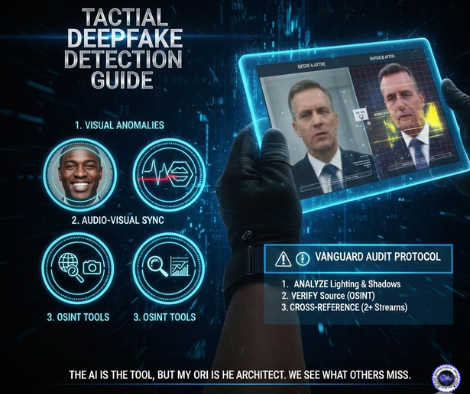
1. Visual Anomalies (The Physical Audit)
AI often struggles with the subtle complexity of human biology. Look for these "Friction Points":
- Unnatural Blinking: Check if the subject blinks too little, too much, or if the blinking looks jerky and robotic.
- The "Double Edge" Effect: Look closely at the edges of the face, especially near the hair and ears; deepfakes often show a slight blur or "ghosting" where the AI face meets the original head.
- Oral Geometry: Observe the teeth and tongue. AI frequently fails to render individual teeth correctly, often creating a "single white block" or misaligning the tongue during speech.
- Eye Reflection: In authentic videos, light reflects consistently in both eyes. In deepfakes, the reflections may be missing, different in each eye, or physically impossible.
2. Audio-Visual Sync (The Pulse Test)
Deepfakes often show a "lag" between the speaker's words and their facial movements:
- Lip-Sync Mismatch: Pay attention to "plosive" sounds (letters like P, B, and M). If the lips don't touch or the timing is off, the video is likely manipulated.
- Robotic Tone: Listen for a lack of emotional inflection or breathing sounds. AI voices often sound "flat" compared to the natural cadence of a human comrade.
3. Tactical OSINT Tools
When visual inspection is not enough, use these digital intelligence methods:
- Reverse Image Search: Take a screenshot of a frame from the video and use Google Lens or Yandex to see if the original, unedited version exists elsewhere.
- Metadata Analysis: Use tools like FotoForensics to look for "ELA" (Error Level Analysis). Areas with higher error levels often indicate digital manipulation or "pasted" elements.
- Source Verification: Check the "Digital Footprint" of the account posting the media. Does the account have a history of credible reporting, or was it created recently specifically to spread this content?
⚠️ Standing Orders: The Vanguard Audit
Before sharing any intelligence in the command group, apply the Vanguard Review Protocol:
- Analyze the lighting—does the shadow on the face match the shadows in the background?
- Verify the source using OSINT techniques.
- Cross-Reference with at least two other credible intelligence streams.
"The AI is the tool, but my Ori is the Architect. We see what others miss."