
See why Cybersecurity is the Highest-Demand Skill of 2026.
The Myth of 100% Trust: Why Software Loopholes Matter
We live our lives through a handful of apps. We use them to talk to our families, manage our bank accounts, and conduct sensitive business. Because these apps come from billion-dollar companies, we tend to trust them "100%."
But the recent WhatsApp Zero-Day attack; where a device could be compromised by a single voice call that wasn't even answered has shattered that illusion of absolute safety.
When software we trust has a "loophole" or a "vulnerability," it’s not just a technical glitch. It is a fundamental breach of our personal and professional security.
The Danger of the "No-Click" Era
For years, the gold standard of digital safety was: "Don't click suspicious links." The "No-Click" exploit changes the game. It means you can be a perfectly cautious user and still be targeted. This implies that:
- Privacy is Fragile: Even encrypted messages are vulnerable if the device itself is compromised.
- Trust is a Variable: No software is perfect. From WhatsApp to banking apps, every line of code is written by humans, and humans make mistakes.
- The Stakes are Rising: Spyware doesn't just steal photos; it tracks your location, listens to your meetings, and accesses your identity.
Why Digital Awareness is No Longer Optional
In the past, "tech training" was for people who wanted to be programmers. Today, digital literacy is a survival skill. At the Think Advancement Initiative Empowerment Foundation (TAIEF), we believe that being "digitally aware" is the only way to navigate this landscape. Awareness doesn't mean you have to be a coder, but it does mean you must understand the ecosystem you live in.
True digital training teaches you:
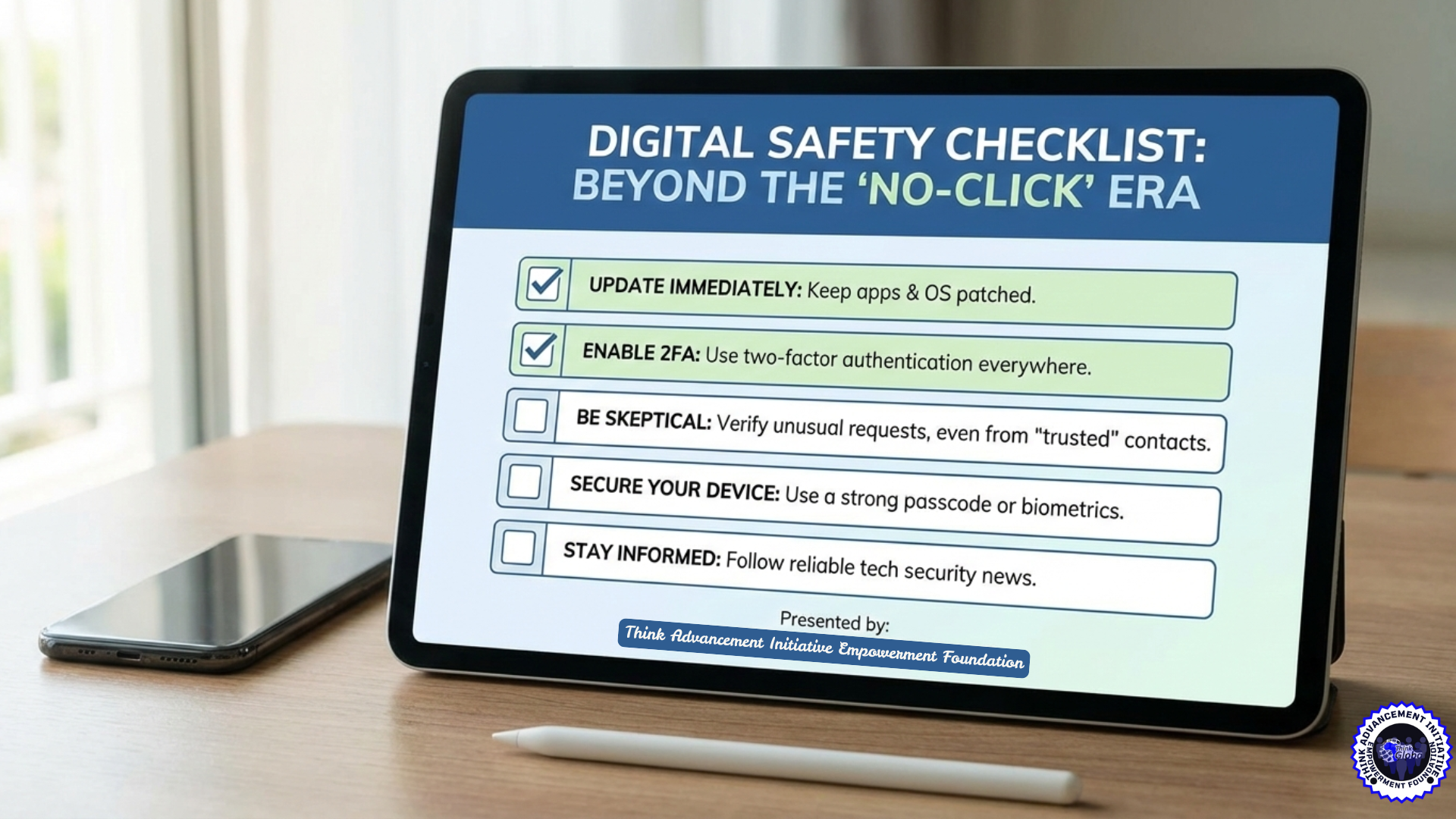
- Systemic Vigilance: Understanding that "set it and forget it" doesn't work. You must stay on top of updates and security patches.
- Threat Recognition: Knowing how to spot the signs of a compromised device, even when there’s no "link" to blame.
- Data Hygiene: Limiting the amount of sensitive information you store in any single "trusted" bucket.
Empowerment Through Education
The goal of attackers is to exploit the "knowledge gap." They rely on the fact that most users don't know what a Zero-Day is or how to protect themselves.
By closing that gap through specialized training; like our tracks in Cybersecurity and AI, we turn vulnerable users into empowered digital citizens. When you understand how technology works, you stop being a victim of its loopholes and start becoming a master of your own digital destiny.
"A single loophole can compromise a smartphone, but a single trained mind can protect a community."